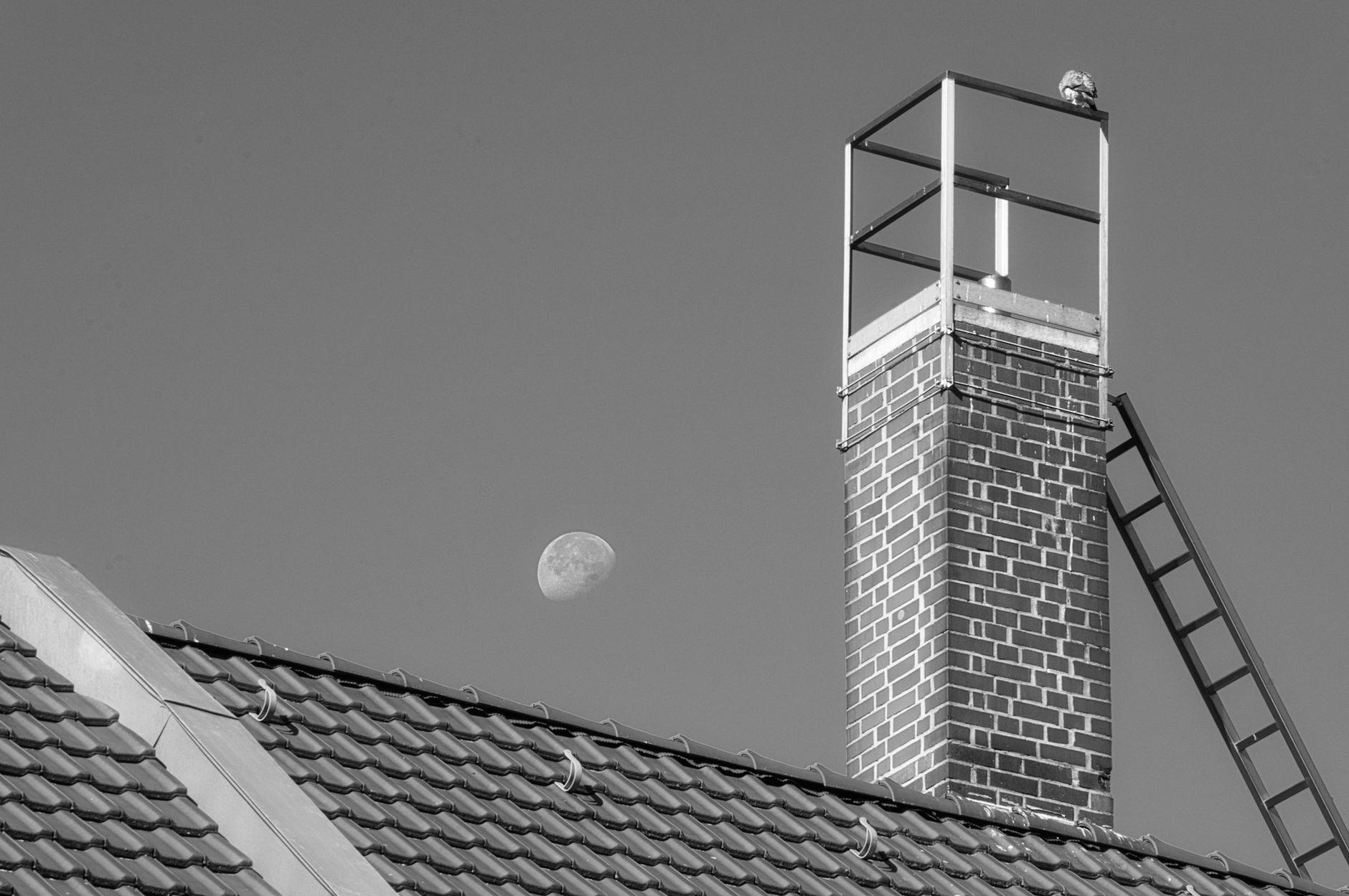
Most owners never see their chimney crown. They see what happens when it fails: a damp patch on the wall beside the fireplace, flaking brick near the top of the stack, chunks of gray concrete in the gutter, or rust streaks running down from the cap. Up close, the crown tells the story plainly. Fine lines, wide splits, a gap where it meets the flue tile, or a top that has broken into loose pieces.
This guide covers what those signs mean, what crown repair involves, and how Denham Chimney Services prices it for houses in Los Angeles.
What the crown is for
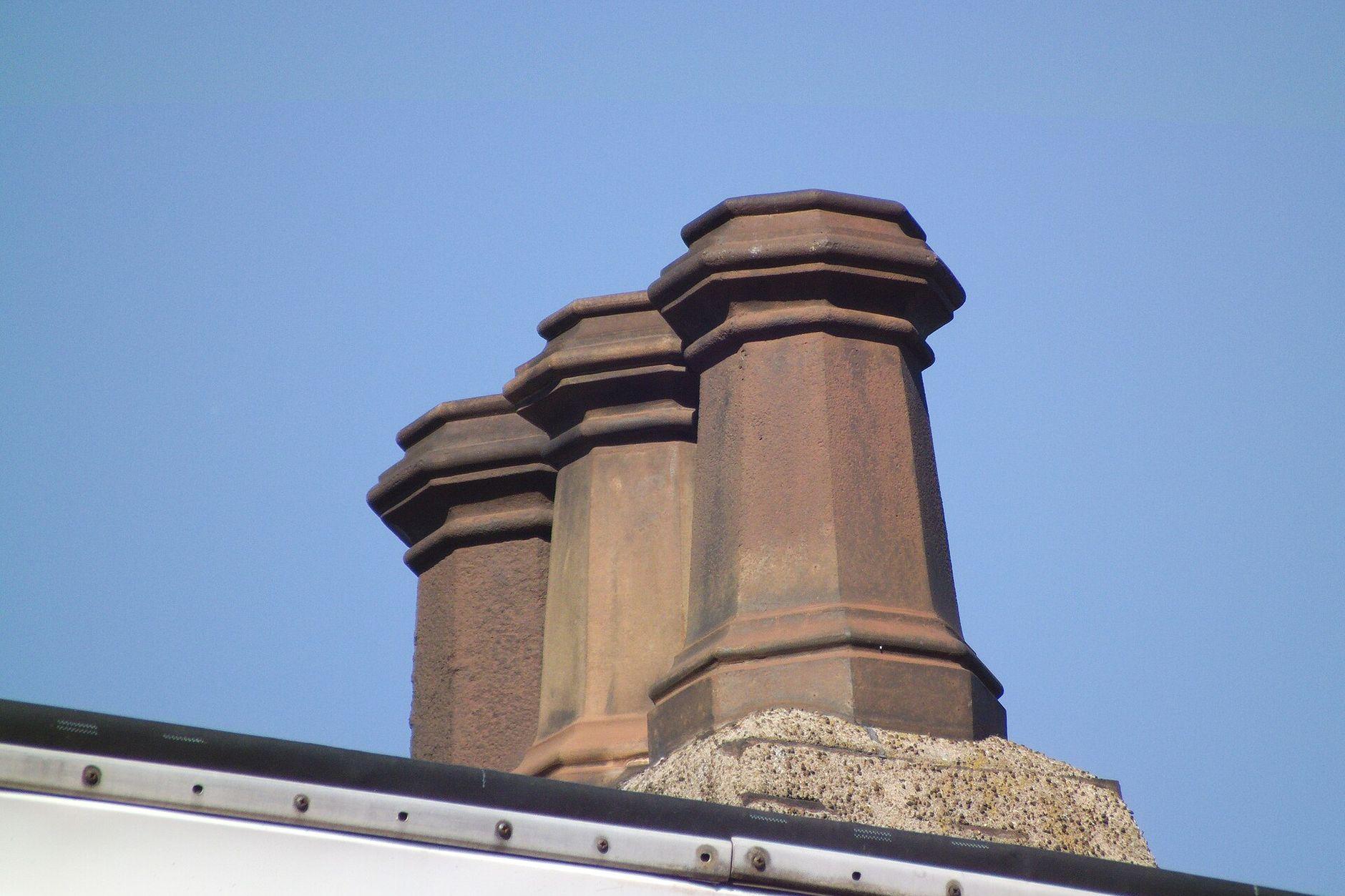
The crown is the concrete slab that caps the brick, the flat top the flue rises through. Rain hits it before anything else on the chimney. A sound crown slopes, sticks out a little past the brick, and throws that water off its edges, away from the masonry face. A failed crown lets the water down into the brick and into the space around the flue.
Reading the cracks
Hairline cracks on the surface. Thin lines that do not go all the way through. Common on crowns that have baked through many Los Angeles summers. They let a little water in now and more later.
Cracks through the slab. You can often see the line carry on down the edge, or the two halves sit at slightly different heights. Water goes straight down into the brick below.
A gap at the flue tile. Concrete and clay grow and shrink at different rates with heat. Where they meet, a gap opens, and rain slips down the outside of the liner into the chimney.
Broken or missing pieces. Sections lift off, or the edge has crumbled back to the brick. Pieces can drop onto the roof or into the yard.
A flat top made of mortar. Many older chimneys were finished with a thin layer of the same mortar used between the bricks, troweled flat with no overhang. These fail early, because joint mortar was never meant to sit exposed on top. We find them often on prewar houses.
The two repairs
Sealing. For a sound crown with surface cracks, a coating made for crowns is brushed on to bridge the cracks and keep the top shedding water. It is the smaller job, and it only holds if the slab under it is solid.
Recasting. When the crown is split through, broken, or was never a proper crown in the first place, sealing it is money wasted. The old slab is broken out down to the brick, a form is built around the top, and a new crown is cast with a real slope and overhang. A flexible break is left around the flue tile so the two can move separately.
What crown repair costs
Crown work has no fixed figure on our list. A narrow bungalow chimney with one flue can be finished in a morning; a wide stack carrying two flues on a two story roof needs more form work, more concrete and more time up top.
What we can tell you up front:
- A Level 1 check at $56 is usually enough to see whether a crown is cracked and whether the brick under it is wet.
- If water has been getting in for a while, a $400 camera inspection shows whether it has reached the flue or the smoke chamber, which changes the scope.
- A cap often goes on with a new crown. Bought alone, the cap gets its price after the flue is measured, and it climbs if the crown is wide or you want copper.
- If the brick below the crown has loosened, the top courses are relaid before the new crown is cast, on the same written scope.
You get the crown figure in writing, split out from any masonry or cap work, before we start.
If you can see cracks from the ground or have found concrete in the gutter, book a crown check on the form and mention whether the fireplace burns wood or gas.
What waiting does
A cracked crown gets worse in a predictable way. Water goes in, the brick and mortar below stay damp, and the joints near the top start to wash out. The brick begins to flake. After a few wet seasons the top of the stack is loose, and a crown job has turned into a masonry repair or a partial rebuild.
Loose brick at the top of a stack is also what comes down first when the ground shakes. On a house in Los Angeles that matters even more than the leak.
Water through the crown reaches the flue as well. Clay tile that sits wet wears faster at its joints, and a cracked liner is a far larger repair than a crown. Our liner guide covers that job.
A crown and a leak are not always the same thing
The crown is one of the main ways water enters a chimney, but not the only one. Before we price a crown, we look at the flashing, the cap and the brick face too. A new crown on a chimney with failed flashing still leaks, and the owner rightly feels they paid for the wrong repair. The leak cost guide walks through the other entry points.
Gas fireplaces still need a sound crown
A gas fireplace or insert venting through an old masonry chimney still depends on the crown. Gas exhaust carries a lot of water vapor, and a wet chimney top makes the inside of the flue wetter still. Owners with gas inserts in Alhambra and Rosemead sometimes assume the chimney no longer matters once the logs are gone. It does.
The chimney crown repair page has more on the service. When you want the top of your chimney looked at, reach us through the contact page.
Ready to Find the Cause at Your House?
A guide can tell you what a symptom usually means. Seeing the chimney tells you what it means for yours. Denham Chimney Services repairs chimneys and fireplaces in Los Angeles, Alhambra, Commerce and Rosemead, and shows you photos of the fault with a written price before any work.