
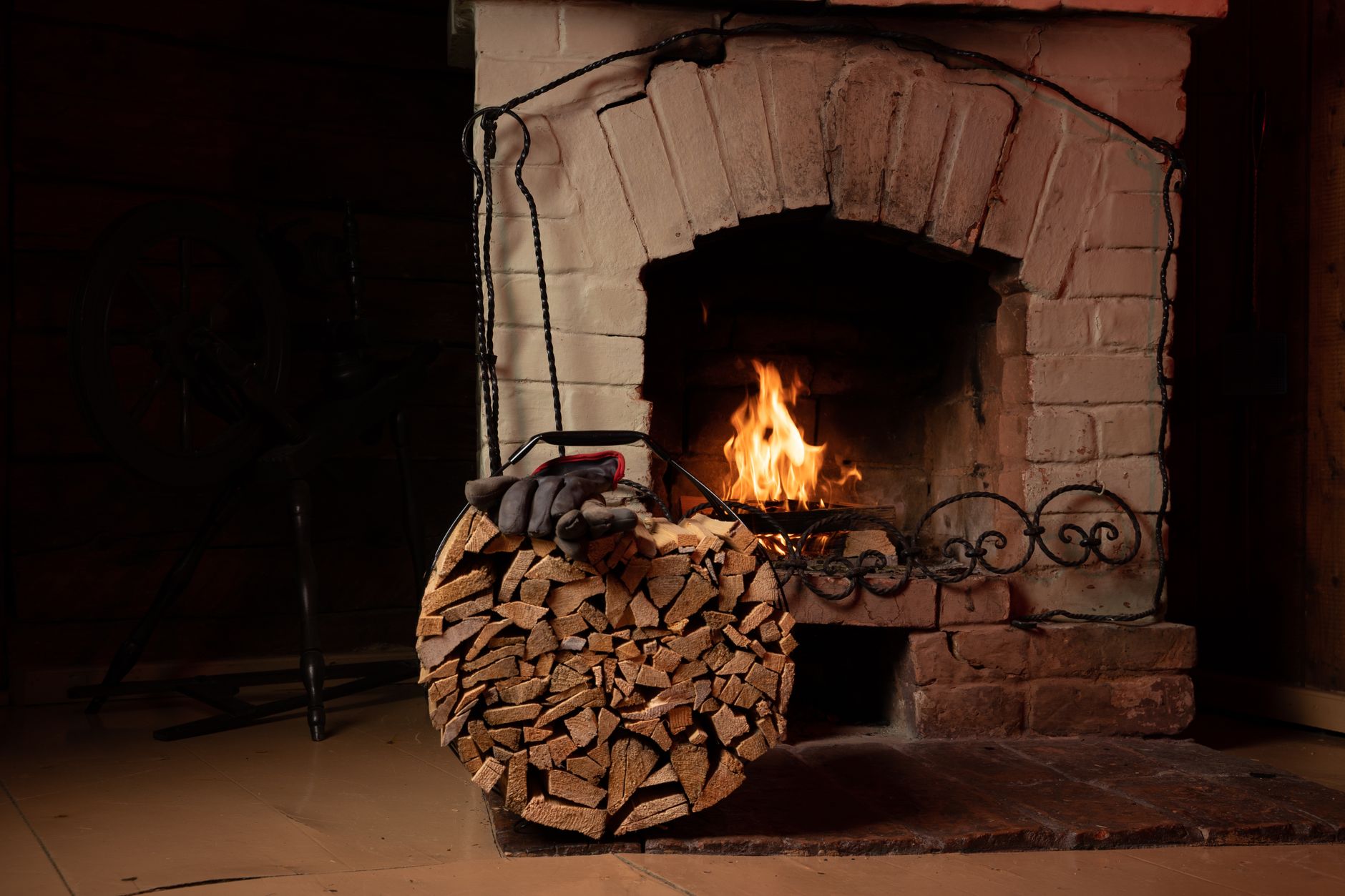
Gas Logs in Los Angeles, Fitted Right and Burning Clean
What Are You Seeing?
Note the symptom, where it shows and whether rain or a lit fire sets it off. We call back to plan the visit.
What This Repair Covers
Black marks on the logs and the brick above, a gas smell at light-up, or a flame that only burns on one side are the common gas log complaints. Most come from logs out of position, blocked burner ports or a set too big for the opening. We fix the cause, or fit a new vented set matched to your firebox, hold the damper open as the code requires, and leak test the connection.
When a Log Set Goes Wrong
Soot is the complaint we hear most. Black patches build up on the logs, then a dark smudge creeps up the brick above the opening, and on bad nights there is a smell. The cause is flame hitting a cool log before the gas has fully burned. Most often the logs have been moved out of place, during a cleaning or after one fell, so they sit in the flame path. Other causes are burner ports clogged with ember material, too much of that material piled on, a set too big for the box, or a set built for one gas being run on the other. Old logs also crack and crumble, and the pieces fall onto the burner and make things worse. Sooting is not just a mess. Incomplete burning produces more carbon monoxide, so a sooty set is a reason to stop using it until it has been looked at.
We fix most of these without a new set. The logs come out, the burner and ports are cleared, the ember material is renewed in the right amount, and the logs go back where the maker's layout puts them. We check the gas pressure and the air setting, and we confirm the damper is held open, because a vented set needs that open path the whole time it runs. If logs are cracked or the burner has corroded, we price a replacement. Many sets in older homes have been in place for years, and the ember material, the burner and the logs all wear at different rates. Sometimes a new burner under the old logs is enough; sometimes the logs themselves have crumbled past use. We point out the state of each part and price only what has actually worn out, so you are not replacing a whole set for one bad log.
Switching From Wood to Gas Logs
Many owners in Los Angeles move from wood to gas logs to avoid no-burn days, the ash and the smoke smell. Gas logs are the simplest form of that switch, simpler than an insert, because they sit in the existing firebox and vent through the existing chimney. That makes the chimney's condition matter. Before a set goes in, we sweep out the wood years, check the flue and damper, and confirm there is a gas line at the hearth or price running one. A chimney with cracked tile or a broken crown gets repaired first. Then we choose a set sized to the firebox so the flame does not lick the walls, with the type of ignition you want, from a manual key to a remote. Each step up in convenience adds cost, and we explain the difference before you decide.
Gas log sets have no fixed figure on this site, since the price depends on the set's size and style, the ignition type and whether gas has to be run to the fireplace. After we have seen the firebox and you have picked a set, you get a written price for the set and its installation. Keep in mind that gas logs are mostly for looks; they warm the space near the hearth but send much of their heat up the flue. If heat matters more than the look of an open fire, a gas insert is the stronger choice. When you contact us, say whether you are fixing an existing set or starting fresh, and whether there is a gas valve at the fireplace now. If the house has never had gas at the hearth, say so; running a new line is separate work and gets its own line on the price.
How Denham Chimney Services Handles a Repair
Symptom First
We start from what you noticed and trace it back
Photos of the Fault
You see the damage before you approve the fix
Price in Writing
You see the number before any work starts
Tested When Done
Water, draft or CO checks after the repair
Gas Logs near you
Local versions of this repair: the faults that show up in each place, the postal codes covered and the house types that shape the work.
CA
Gas Logs in Los Angeles
Gritty sand under the damper is how a tired brick flue speaks up. Plenty of chimneys here were rebuilt once already, after the 1971 or 1994 shaking, and those repairs are aging now. Repointing at the grit stage beats tearing the stack down later.
Local repair notesCA
Gas Logs in Alhambra
Grit piling on the hearth means the joints are giving up. On Granada and Cordova, houses from the 1920s to 1940s mostly have brick chimneys laid on site, and that mortar wears. Repoint it now and a leaning stack never becomes the job.
Local repair notesCA
Gas Logs in Commerce
A sooty smell with the gas logs on is a symptom, not a quirk. Chimneys on these small 1950s and 1960s houses were built in brick or block, and many got gas sets later, which hide an old flue's cracks. The liner gets checked and repaired first.
Local repair notesCA
Gas Logs in Rosemead
A brick that rocks under your hand at the top of a short stack means its joints have let go. Of the homes here, 77% were up before 1980, most of them one-story stucco. Relaying those top courses comes before any of them land on the roof.
Local repair notesRelated Chimney and Fireplace Repairs
Chimney Sweep
A fireplace that smells of old smoke or spills it into the room cleared of creosote, nests and fallen debris.
See this repairChimney Inspection
Reachable parts looked over at Level 1, or recorded flue video at Level 2 when a sale, fire or quake raises questions.
See this repairChimney Repair
Cracked crowns, open joints, loose brick and broken flue tile fixed before water and heat do more damage.
See this repairFireplace Inspection
Firebox, damper, hearth and surround checked from inside the room, for wood or gas units, with written results.
See this repairFireplace Repair
Loose firebrick, failed mortar, a jammed damper or cracked panels fixed so the fireplace is safe to light again.
See this repairChimney Level 2 Inspection
Recorded flue video plus attic and crawl space checks, booked for a sale, a chimney fire, strong shaking or a fuel change.
See this repairChimney Cap Installation
Dripping on the grate, chirping in the flue or leaves in the firebox usually stop once a fitted cap goes on top.
See this repairChimney Flashing Repair
Leaks where the chimney meets the roof traced and sealed with new step and counter flashing, plus a cricket where needed.
See this repairChimney Masonry Repair
Crumbling mortar, flaking brick and white salt stains repaired with materials matched to the age of the chimney.
See this repairChimney Rebuilds
A leaning, cracked or loose stack taken down past the damage and built back up, reinforced, crowned and flashed.
See this repairFireplace Cleaning
Ash, soot and smoke stains cleaned from the firebox, doors and face, so the room stops smelling of old fires.
See this repairGas Fireplace Cleaning
Glass, burner, pilot and vent cleaned on a gas unit that lights slowly, burns yellow or leaves a film on the glass.
See this repairGas Fireplace Repair
A gas unit that will not light, shuts off after a minute or ignores the remote traced to the failed part and fixed.
See this repairFireplace Remodel
Cracked surrounds, loose tile and unsafe hearths replaced, with the fireplace repaired before the new face goes on.
See this repairFireplace Inserts
A sealed insert for a drafty, smoky or weak fireplace, vented through a new liner to the top of the chimney.
See this repairPellet Stove Repair
Pellet stoves that quit partway through a burn, refuse to start or flash a code on the panel, traced and fixed.
See this repairWood Stove Repair
Black glass, a smoky door or a stove that runs too hot fixed with new gaskets, baffles, brick or glass.
See this repairChimney Seismic Retrofit
Brick chimneys that cracked or shifted in past quakes braced or rebuilt so the stack is less likely to fall.
See this repairChimney Crown Repair
Cracked or crumbling crowns sealed, patched or poured again so rain stops soaking down into the brick and firebox.
See this repairDryer Vent Cleaning
Dryers that need two cycles, run hot or smell scorched fixed by clearing the lint packed into the vent run.
See this repairChimney Liner Installation
Cracked or missing flue tile replaced by a stainless liner, so a fireplace, insert or gas unit vents safely again.
See this repairChimney Leak Repair
Water stains, drips in the firebox or damp attic wood near the chimney traced to the source and repaired.
See this repairChimney Waterproofing
Brick that darkens after rain, sheds flakes or grows white salt sealed with a breathable repellent after repairs.
See this repairChimney Damper Repair
Dampers that stick, rattle, will not close or have rusted through repaired or replaced at the firebox or the crown.
See this repairChimney Chase Cover
A rusted, dished or leaking metal top on a framed chimney replaced with a stainless cover made to fit.
See this repair